Guaraní Cosmology Shapes Poetic Hybrid Film ‘Arrow for a Stone Heart’ Ahead of Tallinn Premiere
Brazilian filmmaker Luiza Calagian spent seven years developing a documentary-fiction hybrid told from the perspective of the Guaraní indigenous community on the outskirts of São Paulo, set to premiere at the Tallinn Black Nights Film Festival.
By News Media House Staff ·
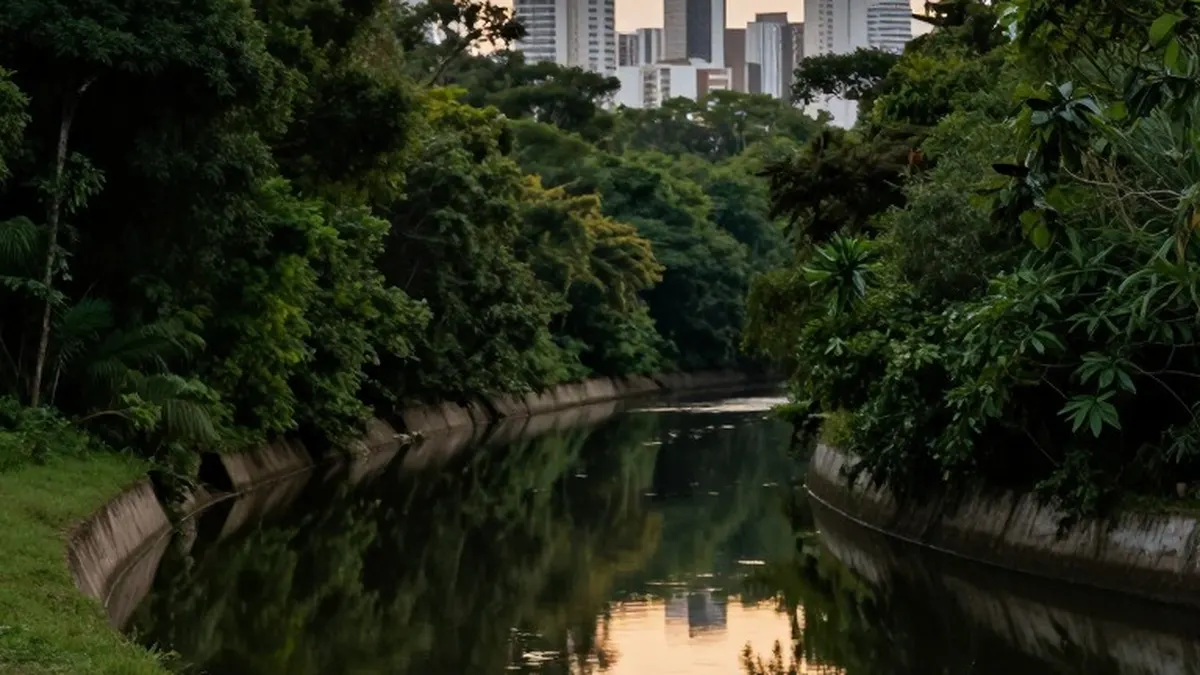
A peccary named Rete wanders the indigenous Guaraní territory on the outskirts of São Paulo, Brazil, recounting how the arrival of colonizers began to transform the natural world. Meanwhile, a woman named Jera Rete dreams of the city invading her village, guided by the voice of an old woman and by a river that speaks to anyone willing to listen. This is the world of Arrow for a Stone Heart (Flecha para Um Coração de Pedra), the poetic debut feature from writer, director and cinematographer Luiza Calagian, made in collaboration with the local Guaraní community.
The documentary-fiction hybrid will celebrate its world premiere on Tuesday, Nov. 17, in the Rebels with a Cause Competition of the 30th edition of the Tallinn Black Nights Film Festival (PÖFF) in Estonia.
Calagian co-wrote the film with Jera Rete, handled cinematography herself and shared editing duties with Caio De. Vinicius Toro and Sabrina Zimmermann produced, with Bruno Cucio as executive producer. Utopia Docs is handling distribution and world sales.
Speaking to The Hollywood Reporter ahead of the premiere, Calagian described the project as a long personal journey. “I kind of grew up with this film. It’s been seven years now,” she said. Over time, she realized the story was not hers to tell from an outside vantage point. “It had to be told from their point of view and from their perspective rather than one that comes from the West.”
That realization became the film’s central mission. “The mission became how do we bring the Guaraní cosmology, the Guaraní philosophy, the way that they see, organize, narrate and symbolize reality into the structure of a film, which is by its nature a Western thing,” Calagian explained. “But this also opened up the possibilities of transformation that this art has.” From the Guaraní perspective, myths, dreams and relationships with non-humans connect different temporalities and perspectives, which is why the film’s narrative departs from convention.
Dreams were Calagian’s starting point. “The Guaraní are very, very, very connected to their dreams,” she said, noting that for them a dream is not merely a product of the mind or imagination but a way of connecting to other dimensions, beings, spirits, departed people and gods.
Jera Rete became a close friend and ultimately the heart of the production. “She embraced the project to the point that she became a co-writer,” Calagian said. Jera also organized who would appear in the film: her two daughters are the other main characters, with the youngest playing the river and the older daughter, who appears briefly at the end, voicing Rete the peccary. Jera is the leader of the village and, in Calagian’s words, “not only the co-writer but also the whole heart of the film.”
The peccary itself carries deep meaning. According to the Guaraní, it can move between worlds, enter different dimensions and visit the gods, and it became the symbol of Calagian’s production company, Mata Fechada Filmes. The river, meanwhile, is considered one of the wisest and most powerful Guaraní spirits, one that commands caution and respect. “Despite all of this destruction, there is still life in the river, which is amazing. Somehow, nature finds a way to survive, even in such adverse conditions,” Calagian said, describing the river as an anthropomorphic presence. Language was chosen with equal care: the invading settlers are called “those who are many,” the common Guaraní term.
Calagian has worked with the Guaraní for more than 10 years, including on a communications campaign pushing the government to recognize indigenous lands within São Paulo, one of the biggest metropolises in the world. She pointed to a historical dispute in the city, where a regional culture celebrates the colonizers responsible for invading territory that has always been Guaraní.
That dispute also inspired the film’s title, which plays on the phrase “heart of stone” while invoking statues and other reminders of colonialism. “There are still a lot of historical monuments, a lot of street names, a lot of public political symbols that celebrate the colonizers, the people who killed and enslaved the indigenous people,” Calagian highlighted. “We understood how important this dispute between narratives was, and that’s how this project was born.” In the film, cinema itself emerges as an opportunity for understanding and, possibly, change.
Originally published by News Media House
More News · National news · Report a business · Got a Story?