Ecuador Seeks Financial Balance Between Oil Extraction and Biodiversity Conservation
Ecuador is leveraging green finance and biodiversity credits to protect its ecosystems while continuing oil extraction, a balancing act that has drawn criticism from environmental groups.
By News Media House Staff ·
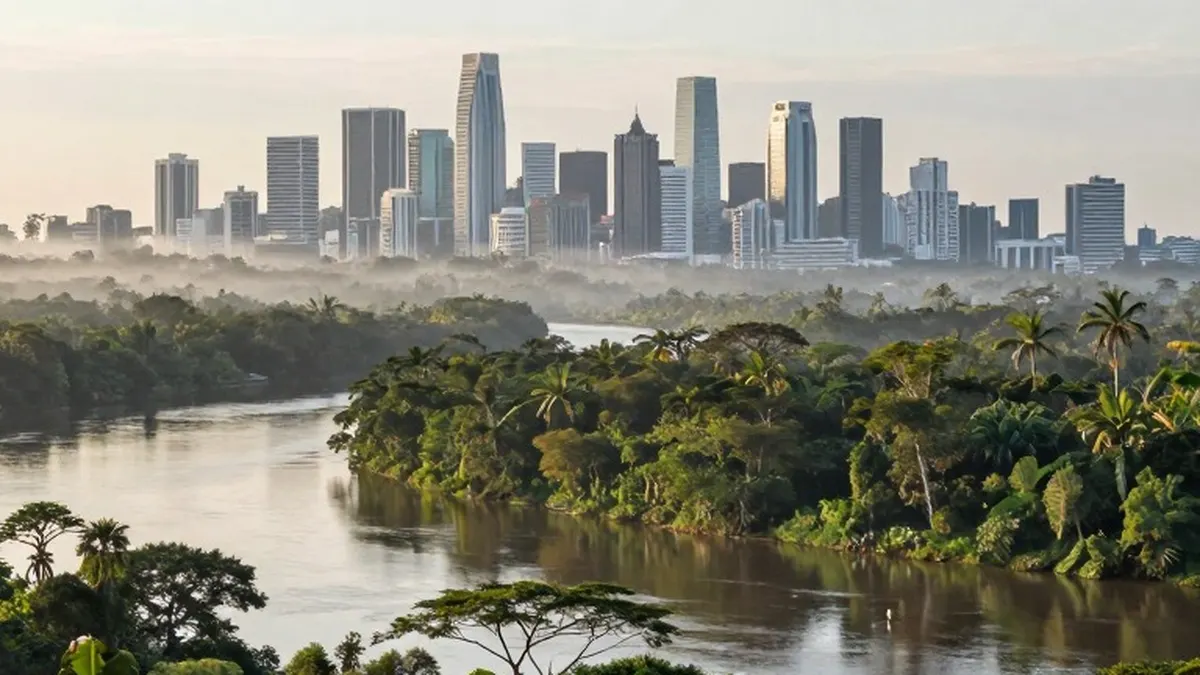
Ecuador is navigating a complex economic challenge as it attempts to protect its renowned natural landscapes while simultaneously capitalizing on its critical minerals and oil reserves. The South American nation, home to the Galapagos Islands, the Amazon rainforest, the Andes, and the Pacific coast, is implementing new financial strategies to fund conservation efforts without halting energy production. These dual objectives have sparked significant debate, with Indigenous and environmental groups raising concerns about the potential environmental costs of continued drilling in sensitive areas.
To channel funds toward nature protection, the government is exploring innovative financial tools, including debt-for-nature swaps and its first sovereign green bond. Ecuador also plans to elevate its global environmental profile by hosting the United Nations biodiversity summit, known as COP18, in 2028. The country has prior experience with green finance, having issued a $120 million biodiversity bond in March 2026 through IDB Invest and Banco Bolivariano to support conservation projects.
The government has previously utilized debt swaps in 2023 and 2024, where national debt was refinanced on favorable terms in exchange for commitments to spend the savings on conservation. These deals freed up approximately $1.1 billion for projects in the Amazon and the Galapagos Islands. Juan Carlos Blum, the minister of environment and energy, stated that the country aims to issue sovereign green bonds for the first time in 2027. He noted that the government is seeking advice from the European Union, which established green bond standards in 2024, to help structure these instruments for protecting coastal and mountainous regions.
Despite these financial initiatives, a primary challenge remains the nation's heavy reliance on oil. In October 2026, the government announced plans to open new tenders for oil exploration in parts of the Amazon, a move that drew strong criticism from Indigenous leaders. Blum described the situation as a delicate matter, stating that his day-to-day reality involves balancing biodiversity protection with the use of natural resources, whether renewable or not. He emphasized that the country is being careful to maintain this equilibrium.
According to the International Energy Agency, about 80% of Ecuador's energy was generated from oil and oil products in 2024. Meanwhile, roughly two-thirds of the country's electricity was produced using hydroelectric power. Blum also highlighted the importance of cracking down on illegal mining, which he identified as a far greater environmental problem than legal mining, even though he acknowledged the impact of legal operations.
A new approach to monetizing nature was introduced at Ecuador's first Bio Summit, held in Quito from November 4 to November 6, 2026. The event aimed to help the country's natural assets enter the global financial system. Marcelo Salame, the president of the event, announced a project to introduce biodiversity credits to the country for the first time. This initiative will focus on preserving and monetizing a 260-hectare area of the Prosperina forest owned by ESPOL University in Guayaquil.
Biodiversity credits function similarly to carbon credits, where companies purchase credits to meet sustainability goals. However, they track a broader range of ecosystem measures, such as species counts and tree canopy cover, rather than just carbon emissions. Martin Vaquié, co-founder of the Berlin-based company Bloomlabs, clarified that while carbon credits can offset emissions, biodiversity credits are currently used to fund verified nature outcomes rather than compensating for damage.
Jerry Toth, a conservationist and co-founder of the nonprofit Third Millennium Alliance, expressed hope that biodiversity credits can capture the nuances of an ecosystem more effectively than carbon markets. He noted that carbon markets can reduce a forest's value to a single metric, which may lead to optimization for that single factor at the expense of other ecological aspects. Toth, who also runs the chocolate maker To'ak, believes that using chocolate production can help reverse deforestation.
Toth's organization works with farmers to restore degraded land by planting cacao in the shade of taller trees. To'ak pays these farmers approximately $1.20 per pound of cacao, which is about double the current market price. Toth stated that the key question is ensuring that chocolate production does not deplete nature. He emphasized that Ecuador is still figuring out how to capture the value of its immense ecological resources in a way that benefits both the local people and the ecosystem.
Originally published by News Media House
More News · National news · Report a business · Got a Story?