Jerusalem’s Christian Quarter Road to Gain Wheelchair Access as Ancient Stones Are Preserved
The Old City accessibility project will combine level paving for wheelchairs and strollers with conservation of ancient stonework and replacement of underground utilities.
By News Media House Staff ·
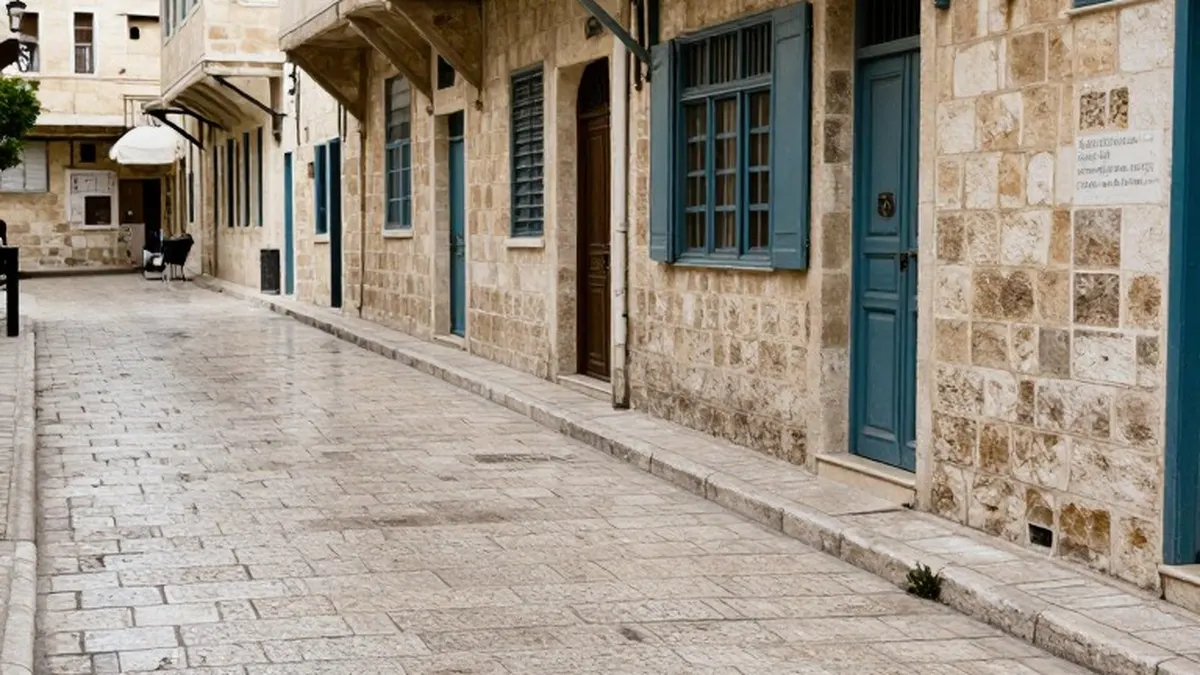
Jerusalem’s Old City accessibility project has reached Christian Quarter Road, an ancient street dating to around 135 CE, when the city was known under Roman rule as Aelia Capitolina. The work aims to provide access for wheelchairs and strollers while conserving the stonework of the roughly 1,900-year-old route.
Planning for the broader project began in 2009, and it was formally inaugurated a decade later. The Jerusalem Affairs Ministry is leading the effort alongside the Jerusalem Municipality’s Accessibility Department and the Israel Antiquities Authority, with East Jerusalem Development Ltd., known as PAMI, carrying out the work. Accessibility consultants are guiding construction within the limits imposed by local terrain.
Around six kilometers of Old City alleyways have been made accessible since the work began, within the approximately one square kilometer enclosed by the city walls. On Christian Quarter Road, the planned changes extend beyond the walking surface to include replacement of underground water and electricity lines, as well as work on building facades, awnings and links to neighboring streets.
The street’s ancient paving was previously the focus of work in 1977, when the municipality and PAMI undertook infrastructure improvements and market rehabilitation. Archaeologists Shlomo Margalit, Doron Chen and Giora Solar discovered a Byzantine-era road about 60 centimeters below the existing street. They identified the remains as part of the medieval Patriarch’s Street, whose presence is suggested by the sixth-century Madaba Map.
During that earlier work, Roman-Byzantine paving stones were lifted to the modern street level and incorporated into the road. The arrangement allowed pedestrians to walk across stones used by Jerusalem’s residents some 1,900 years ago. Their preservation is now a central part of the accessibility work.
Earlier in the week, Israel Antiquities Authority specialists mapped 50 Roman paving stones for conservation. About half were classified as being in a complex conservation condition. Under the authority’s guidelines, the ancient pavement will be fully dismantled, with every stone numbered, measured and documented on site before it is carefully lifted.
Specialists will assess all the stones before deciding which can return to the street and which must remain in storage. The original Roman pavement is to be laid again along a strip about 1.5 meters wide on the eastern side. Level paving suitable for wheelchair access will cover the western side.
Jerusalem Affairs Ministry CEO Shimon Elbum described the work as part of the ministry’s ambition to make Jerusalem the world’s most accessible city. Mayor Moshe Lion said access to the city’s historic and religious sites was a matter of equality and dignity. He said the municipality would continue its efforts so that everyone wishing to visit the Old City could do so without mobility limitations.
Originally published by News Media House